

By Olivia Kim
The Long Road After a Crisis
When a storage tank at GKN Aerospace overheated earlier this year on Western Avenue, the resulting evacuation—around 50,000 residents across several cities—highlighted the fragility of living near heavy industry. Concerned neighbors asked: Were we warned early enough? Will this happen again?
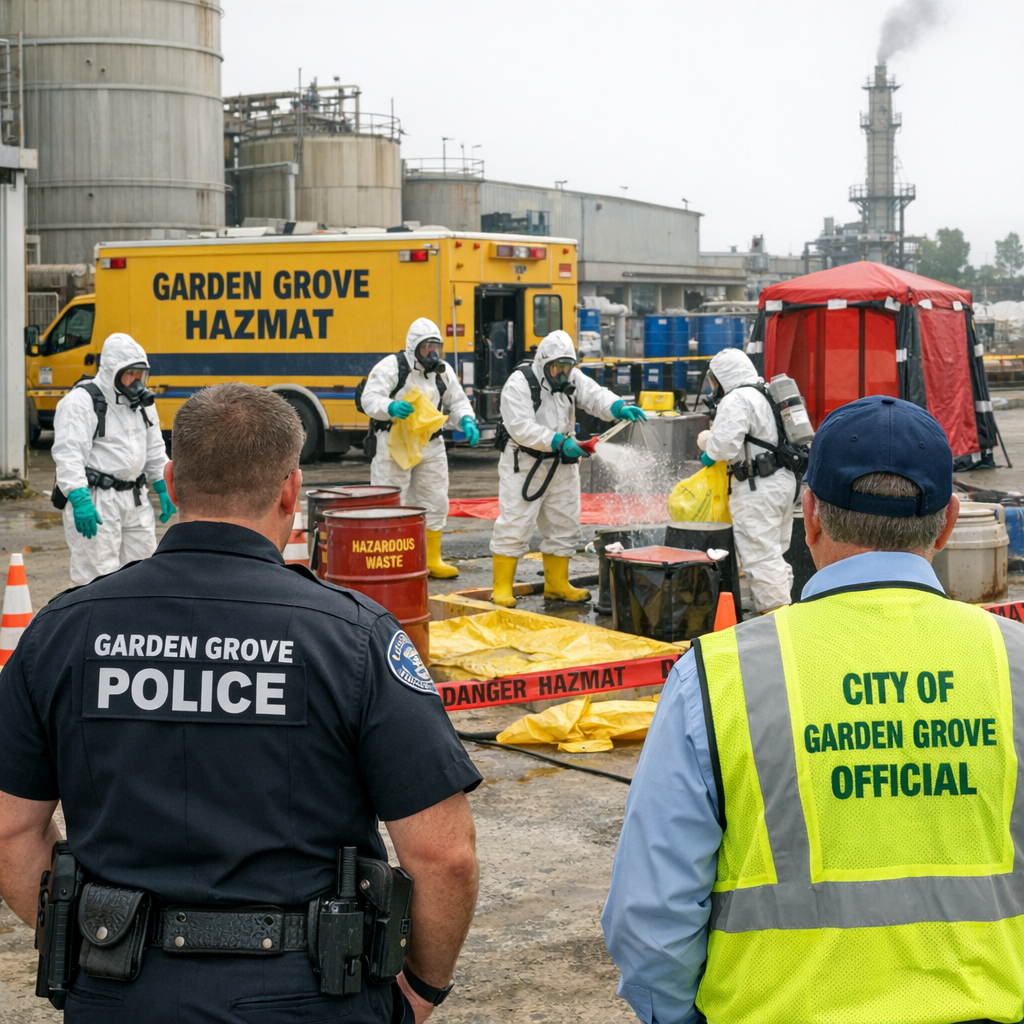
Workers are now conducting cleanup operations, removing neutralized methyl methacrylate from affected tanks. Monitors continue tracking air quality, and odor might be detectable in low “non-hazardous” concentrations during the process.
Community, Business, and Legal Responses
GKN has committed $100 million toward residents and businesses disrupted by the emergency. Small business recovery centers have opened to assist those who lost income or faced closures during evacuations.
More than 30 lawsuits allege negligence and delayed evacuation. Several claim people like Debbie Cohran, who lives just yards from the facility, weren’t alerted until too late.
What the City Can Do — Now and Going Forward
Leveraging Existing Authority
Garden Grove has already called on company representatives to attend council meetings and pushed for formal accountability. Legal staff are evaluating whether the facility could be considered a public nuisance under state and federal laws.
Preventing the Next One
Residents want stricter oversight: more frequent inspections, better emergency alerts, zoning reviews that limit facilities with hazardous materials near homes. The city’s council priorities include code enforcement, public safety, and infrastructure improvements—issues that intersect deeply with what the community has just gone through.
Staying Informed at the Local Level
To help residents keep track: City Council regular meetings happen the second and fourth Tuesday of each month; planning commission meetings are first and third Thursdays. Updates are posted on the city’s website, and public input is often welcomed at workshops and special sessions.
Why This Matters
Garden Grove’s experience isn’t unique—but it does raise key questions about who gets to decide what industries sit near where people live, how risks are communicated, and how responsibility is enforced. For many in this multicultural community, the chemical incident underscored that environmental safety isn’t just a matter of infrastructure—it’s about equity, voice, and trust.
The path ahead isn’t just cleanup. For this city to heal, residents want transparency, stronger rules, and assurances that voices—and health—won’t be overlooked again.